Karhutla: It Takes Time

- Created Sep 26 2026
- / 100 Read
Karhutla: It Takes Time

Karhutla: It Takes Time!
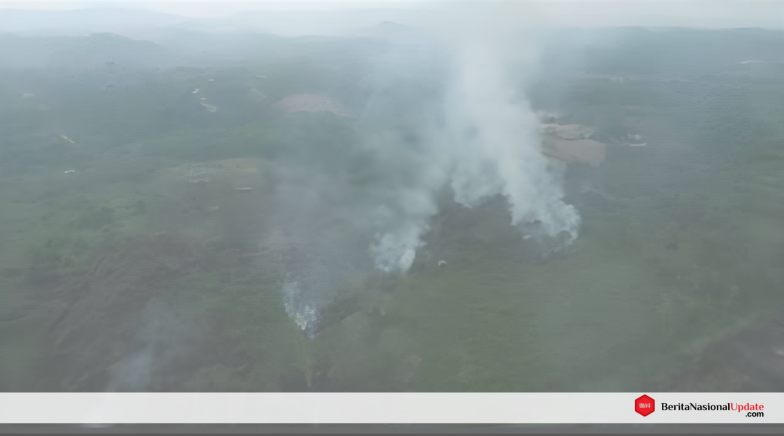
Forest and land fires (karhutla), whose impacts continue to affect several regions in Indonesia, are the product of interactions between human, ecological, and meteorological factors. The practice of clearing land with fire, concession management, peatland degradation, and human activities are significant factors. However, fire intensity is also heavily influenced by droughts, wind patterns, and climate phenomena such as El Nino.
The year 2026 demonstrates this clearly. ASEAN noted that hotspots in the southern ASEAN region during the first half of 2026 increased by approximately 86 percent compared to the same period in the previous year. ASEAN also warned that the El Nio developing since mid-2026 could prolong dry conditions and increase the risk of fires and transboundary haze (ASEAN, 2026). Therefore, karhutla policies must be evaluated based on the ability to reduce risks under specific conditions, rather than by a standard demanding zero fires every single year.
Data also shows that there is on-track progress. The Ministry of Environment and Forestry (KLHK) recorded the karhutla area at around 1.649 million hectares in 2019 and 1.161 million hectares in 2023. This is a decrease of approximately 29.6 percent (KLHK, 2023). This figure does not mean Indonesia has comprehensively solved the karhutla problem, but rather indicates positive progress.
In September 2026, the National Disaster Management Agency (BNPB) reported coordination among the central government, regional governments, the Indonesian National Armed Forces (TNI), the Indonesian National Police (Polri), the Meteorology, Climatology, and Geophysical Agency (BMKG), technical ministries, and Right to Cultivate (HGU) holders. The measures taken include hotspot monitoring, patrols, ground checks, land wetting, fire containment, cooling, weather modification operations, air quality monitoring, and law enforcement (BNPB, 2026).
The Ministry of Forestry also utilizes satellite data from NASA Terra/Aqua, SNPP, and NOAA-20 to identify hotspots with a high confidence level. This data is then combined with field verification. The government has even explicitly cautioned that a hotspot is not a direct synonym for a fire event, meaning every indication must be verified through a ground check (Ministry of Forestry, 2026).
In July 2026, ASEAN member states agreed to strengthen the Implementation Plan for the ASEAN Investment Framework for Haze-Free Sustainable Land Management and continue the ASEAN Peatland Management Strategy 2023--2030. The target is to build an ASEAN free from transboundary haze by 2030 (ASEAN, 2026). The question is whether this framework can actually alter behavior and land governance at the local level.
Recurring fires indicate that, in addition to extreme weather anomalies, prevention mechanisms still have loopholes. The vigorous law enforcement carried out recently does not always result in direct ecological recovery; it takes time. Similarly, inter-agency coordination still requires strengthening and perhaps reorientation, because in my opinion, peatland management, for example, has become an entrenched structural issue rooted in the past.
Therefore, I believe that this change requires three agendas.
First, prevention must become increasingly risk-based. Regions with a history of high fire frequency, degraded peatlands, extreme dry conditions, and intensive human activity must be prioritized for surveillance before the fire season reaches its peak.
Second, responsibility must be more location- and actor-based. Hotspot data must be linked to land status, concession holders, peat conditions, community activities, and fire history. This way, law enforcement does not just stop at counting the number of suspects but generates measurable deterrence.
Third, prevention must become an economic and land governance agenda, not merely a firefighting one. If burning remains the cheapest land-clearing method for some actors, law enforcement without economic alternatives will not be enough. Conversely, incentives for zero-burning land management, peatland restoration, wetting systems, and community supervision must be expanded.
It takes time.
Share News
For Add Product Review,You Need To Login First